

Children’s Eye Examination
A Children’s Eye Examination is a comprehensive evaluation of a child’s visual development, eye health, and eye coordination. Many eye problems in children do not show obvious signs, making regular eye check-ups essential for early detection and timely treatment.
Why Children’s Eye Examination Is Important
Healthy vision plays a vital role in a child’s learning, growth, and overall development.Undetected eye problems can affect reading ability, classroom performance, and confidence.
Early eye examinations help in:
- Detecting vision problems at an early stage
- Ensuring proper visual development
- Preventing long-term vision complications
- Supporting academic and social growth
When Should a Child Have an Eye Examination?
Eye examinations are recommended at different stages of childhood:
At Birth
Basic eye screening to rule out congenital eye problems.
Before Starting School
Ensures visual readiness for reading, writing, and classroom learning.
School-going Age
Regular check-ups to monitor vision changes as the child grows.
Any Time Symptoms Appear
Eye strain, squinting, frequent headaches, or poor concentration.
Signs Your Child May Need an Eye Check-Up
Parents should watch for the following signs that may indicate a vision problem:
Frequent eye rubbing or blinking
Squinting or closing one eye
Sitting too close to books or screens
Headaches or eye strain
Poor attention span
Difficulty in reading or writing
Complaints of blurred or double vision
What Does a Children’s Eye Examination Include?
A complete pediatric eye exam goes beyond simply reading letters on a chart.
Visual Acuity Assessment
Checks how clearly your child can see at different distances.
Eye Alignment & Movement
Evaluates how well the eyes work together and track objects.
Refraction Test
Determines whether glasses are needed to correct vision.
Binocular Vision & Depth
Assesses depth perception and coordinated use of both eyes.
Eye Health Examination
Checks internal and external eye health for any abnormalities.
Pediatric Disease Screening
Screens for common and rare childhood eye conditions.
Common Conditions Detected During Examination
A children’s eye examination can help detect:
- Refractive errors (myopia, hyperopia, astigmatism)
- Amblyopia (lazy eye)
- Squint (strabismus)
- Accommodation & convergence disorders
- Pediatric cataract or glaucoma
- Retinal & neurological eye conditions
Importance of Early Detection
Early diagnosis allows treatment during the most critical period of visual development. Delayed detection may result in:
- Permanent vision loss
- Learning difficulties
- Reduced depth perception
- Poor eye coordination
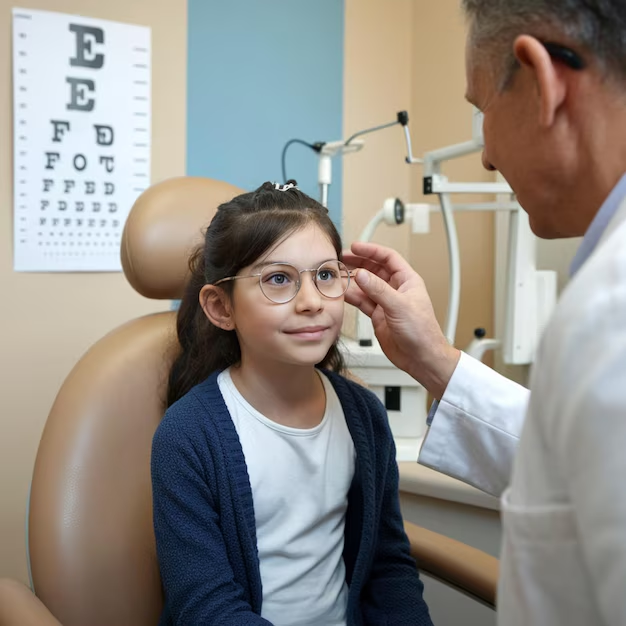
Child-Friendly & Comfortable Examination
Children’s eye examinations are conducted in a calm, friendly, and non-threatening environment.
Special child-friendly techniques and tools are used to ensure accurate results without causing stress or fear.
Treatment & Follow-Up
If a vision problem is detected, treatment may include: